
A recent flood of rustinel edr has captured the industry’s attention, with May 2026 seeing a particularly intense surge. Projects like Rustinel, a Rust-based EDR agent, and Vigolium, an AI-enhanced vulnerability scanner, promise to unify and automate complex security tasks. These tools exemplify a broader trend: the rapid evolution of community-driven security software aimed at democratizing defense. However, this accelerated progress introduces substantial questions about stability, maintenance, and the true cost of “free” software. This report cuts through the hype to analyze the real-world implications of adopting the latest generation of rustinel edr.
Table of Contents
The Shifting Landscape of OSS Security
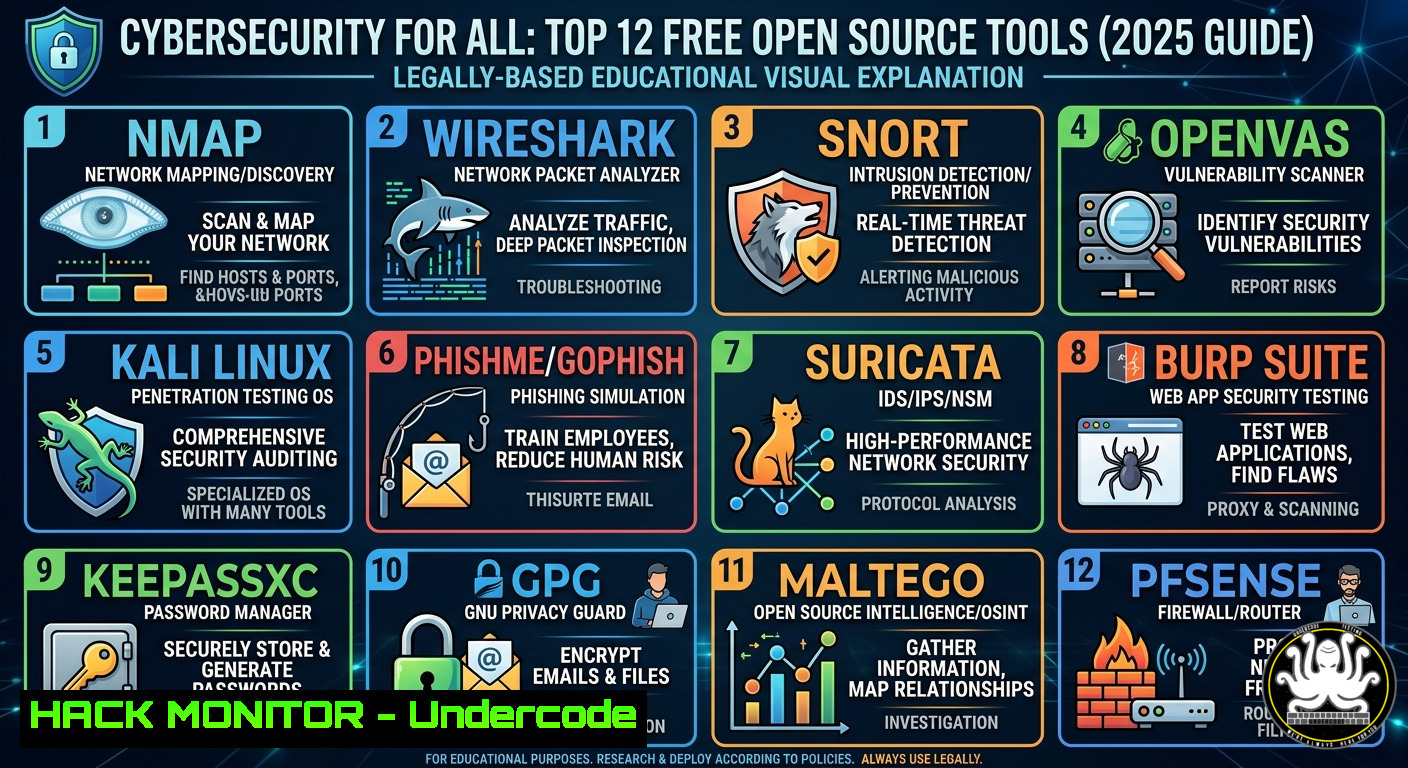
The world of rustinel edr is no longer just a collection of niche utilities; it’s a battleground of well-funded foundations, corporate-backed projects, and autonomous AI agents. On one side, you have established, broadly adopted platforms like the Elastic Stack for logging, Wazuh for endpoint detection, and Suricata for network monitoring. These projects often have years of development, large communities, and sometimes commercial entities providing support, forming a kind of operational backbone for many security teams. Their “moat” is their established user base and proven, albeit sometimes complex, track record.
In contrast, a new class of rustinel edr is emerging, one that is deeply infused with artificial intelligence. Tools like Sandyaa, an autonomous bug hunter that uses LLMs to find and generate exploits for vulnerabilities, represent a paradigm shift from static analysis. Similarly, AIMap is designed to find and test exposed AI endpoints, a problem that has exploded in the last year. This new wave isn’t just about providing free tools; it’s about delivering agentic, autonomous capabilities that were previously the domain of nation-state actors or elite penetration testing firms.
The power players are now organizations like the Open Source Security Foundation (OpenSSF), which is backed by tech giants and works to harden the supply chain, and even large companies like IBM, which recently launched a $5 billion initiative called Project Lightwell to use AI for vulnerability detection.
Related article: Cyber incident reporting Faces a Critical Threat From Industry Pushback
Debunking the Claims of Next-Gen rustinel edr
The marketing claims for the latest rustinel edr are often remarkable. Vigolium, for instance, claims to combine deterministic scanning with “AI-driven auditing” to autonomously plan attacks and triage findings. While the open-source scanner itself is available, the operational layer—collaboration, scheduling, and scaling—is part of a commercial “Cloud Console.” This “open core” model is common, but it raises critical questions about where the true innovation lies: in the community project or the proprietary wrapper. The project’s creator even acknowledges that trust is lost the moment new detection capabilities move out of the open repository to upsell the console.
Moreover, the reliance on AI introduces its own set of potential failure points. While tools like Sandyaa and GitHub Copilot can accelerate code analysis and generation, they also confidently produce insecure code if trained on flawed examples. One developer on Reddit creating an AI code scanner noted the importance of context-aware detection, as an AI can easily miss the semantic meaning of a vulnerability. The problem of “plausible-sounding findings that fail to reproduce” is a persistent issue in LLM-assisted security testing. This suggests that while AI can be a powerful assistant, it is not yet a replacement for human expertise, and the hype around fully autonomous security agents should be met with a dose of skepticism.
The real value often comes from tools that augment, rather than replace, human analysts.
Technological Contradictions and Regulatory Headwinds
A significant tension exists between the fast, often chaotic, development of rustinel edr and the increasing demand for security assurance and regulatory compliance. Government bodies like the Cybersecurity and Infrastructure Security Agency (CISA) have released roadmaps emphasizing the need to secure the open-source ecosystem, which underpins up to 96% of codebases in some studies. These initiatives focus on driving visibility, reducing risks to federal systems, and hardening the ecosystem as a whole. This push for governance runs headlong into the reality of open-source development: many critical projects are under-resourced or maintained by volunteers.
This friction is evident in the context of supply chain security. Attackers increasingly target build processes and dependencies rather than the final application, a risk that grows with every unvetted open-source library a developer adds. While organizations like the OpenSSF are creating frameworks and tools for generating Software Bills of Materials (SBOMs), adoption is not universal, and managing these dependencies remains a complex task. A recent Gartner report highlights that uncontrolled use of open-source components can introduce unmaintained, vulnerable, and even malicious code into an organization. The rise of AI-powered tools that can be deployed with a single command only exacerbates this challenge, making robust governance more critical than ever.
Also read: Nanoscale devices: A Critical Warning for the Chip Industry in 2026
The Bottom Line on rustinel edr
The takeaway is that, while the latest wave of rustinel edr offers powerful new capabilities, it is not a silver bullet. The core challenges of maintenance, support, and governance remain, and are often amplified by the complexity and opacity of AI-driven systems. Adopting these tools without a clear understanding of their limitations and the infrastructure required to support them introduces significant risk. The promise of free software can come at a high cost if it leads to a security incident due to an unmaintained dependency or a flawed AI model.
Critical Signals to Watch:
* Monitor: The “open core” boundary. When a project’s core security features begin migrating from the free version to a commercial console, its value to the community diminishes.
* Watch for: The ratio of human oversight. Tools that demand constant human verification of AI-generated findings may offer little real-world productivity gain over traditional methods.
* Track: Community health. A decline in commits, slow response to issues, or the departure of key maintainers can signal a project is becoming abandoned and therefore risky.
* Assess: Regulatory alignment.
As rules like the EU’s Cyber Resilience Act take hold, check if the tools you use help you comply with requirements like SBOM generation and vulnerability disclosure.
* Look for: Corporate-backed clearinghouses. Initiatives like Project Lightwell indicate a move toward centralized, large-scale scanning, which could either bolster or compete with decentralized community efforts.
The primary value of rustinel edr has always been transparency and community-driven improvement. As we enter an era of AI-augmented and agentic security, it is more important than ever to apply that same critical, open-source ethos to the tools themselves.