
The world of high-performance computing is currently reeling, NVIDIA has placed a multi-billion dollar wager on nvidia photonics. This aggressive investment isn’t just about faster chips; it’s a desperate bid to solve the fundamental data bottleneck and energy crisis threatening to stall the entire AI revolution. Since March 2026, the GPU giant has poured billions into the the technology ecosystem, signaling a dramatic shift in how future data centers will be architected. The core of the issue is that as AI models become exponentially larger, the electrical wires connecting thousands of GPUs are hitting a physical limit, consuming unsustainable amounts of power and creating a data traffic jam.
Table of Contents
The Power Players in the nvidia photonics Arena
Industry observers note that, the this innovation landscape is a complex ecosystem of established players and agile startups. Nvidia’s strategy appears to be one of aggressive acquisition and investment rather than purely in-house development. Their recent multi-billion dollar infusion has targeted key specialists like Lumentum and Coherent, who are experts in optical components, alongside a massive $500 million funding round for the startup Ayer Labs, which is rumored to be developing next-generation optical I/O. This approach allows Nvidia to rapidly absorb critical expertise.
Also read: Saas security report Warning: The Hidden Risk of Shadow AI
It would be foolish to ignore the titan that is Intel. Intel has been a pioneer in the system for over a decade, leveraging its own foundries to produce photonic integrated circuits at scale. While Nvidia is buying its way into the market, Intel has been building the foundational technology from the ground up, giving it a potentially significant advantage in manufacturing and cost control. The competition in it is not just about connecting GPUs; it’s a strategic battle for the future architecture of the data center itself.
The Critical Flaws in the nvidia photonics Push
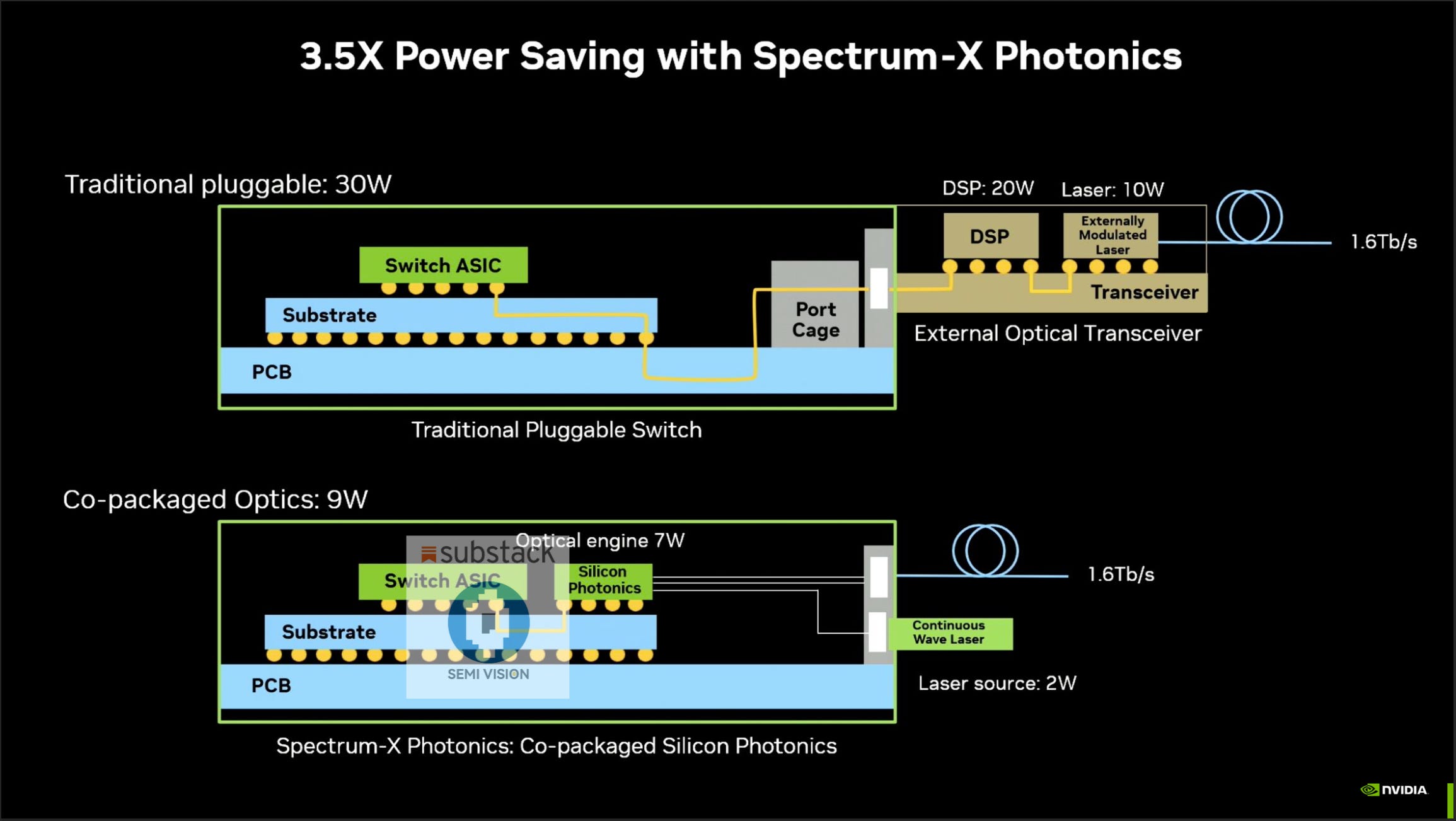
The official claim from the company is that the platform will seamlessly solve the twin crises of data bottlenecks and energy consumption in AI clusters. CEO Jensen Huang has stated that the company is already integrating photonics into its GPU-to-GPU interconnects, promising a future of exponentially scalable AI infrastructure. It’s an attractive picture: replacing power-hungry copper wires with efficient, high-bandwidth beams of light to create warehouse-scale computers.
Contradicting this rosy picture, the transition to the technology is fraught with significant technical and economic hurdles. Industry insiders speaking on background highlight the immense challenges in manufacturing and packaging co-packaged optics (CPO), where the optical components are integrated directly with the silicon chips. Yields are reportedly low, and thermal management becomes a nightmare. While Nvidia invests in external partners, this creates a fragmented supply chain that could introduce reliability issues and dependencies that a vertically integrated player like Intel might avoid. The promise of this innovation is real, but the path to mass adoption is far from the straight line Nvidia portrays.
The Standardization War Looms
A critical friction point for the industry is the battle between proprietary ecosystems and open standards. Nvidia has a long and successful history of building a “moat” around its products with proprietary software and hardware standards like CUDA. There is a growing concern that the company will attempt the same strategy with its optical interconnects, locking customers into an all-Nvidia hardware stack from the GPU to the network fabric. This would give Nvidia unprecedented pricing power and control over the direction of AI infrastructure.
Related article: Sovereign cloud security: A Critical Warning for Global CISOs in 2026
Opposing this approach are a growing movement for open standards in the the system space. Organizations like the Optical Internetworking Forum (OIF) are working to define common specifications that would allow components from different vendors—like Intel, AMD, and others—to work together seamlessly. This open approach fosters competition, reduces costs, and prevents vendor lock-in, which is a future many large cloud providers and enterprise customers desperately desire. The ultimate direction—proprietary or open—will be a key battleground for it over the next few years.
The Bottom Line on nvidia photonics
The final analysis shows the platform is the future of high-performance computing, and Nvidia’s aggressive investment has validated and accelerated this transition. However, the company’s narrative of a simple, inevitable victory glosses over the harsh realities of manufacturing complexity, intense competition from established players like Intel, and a looming philosophical war over open versus proprietary standards. Nvidia has placed its bet, but the race is far from over. This isn’t just a technology upgrade; it’s a reshaping of the power dynamics in the entire tech industry.
Critical Signals to Watch:
- Monitor: The first product announcements from Ayer Labs. Will they deliver a truly disruptive optical I/O solution that justifies the massive investment?
- A critical signal: Intel’s next-generation the technology product release. Will they leverage their foundry advantage to produce a cheaper, more integrated solution that undercuts Nvidia’s partner-led strategy?
- Follow: Progress reports from the OIF and other standards bodies. Wide-scale adoption of an open standard could significantly blunt Nvidia’s proprietary ambitions.
- Look for: Publicly released data on the power consumption and cost-per-bit of deployed large-scale nvidia photonics interconnects. This will be the ultimate measure of whether the technology is living up to its promises.